

Customers are willing to wait briefly for assistance, but they get frustrated when they have to explain the same issue repeatedly.
Customers often describe their issue in chat, then repeat it by email and again on phone calls. This repetition suggests the company did not address their concern the first time.
This quickly breaks down trust in the customer experience. Memory-rich AI solves this problem.
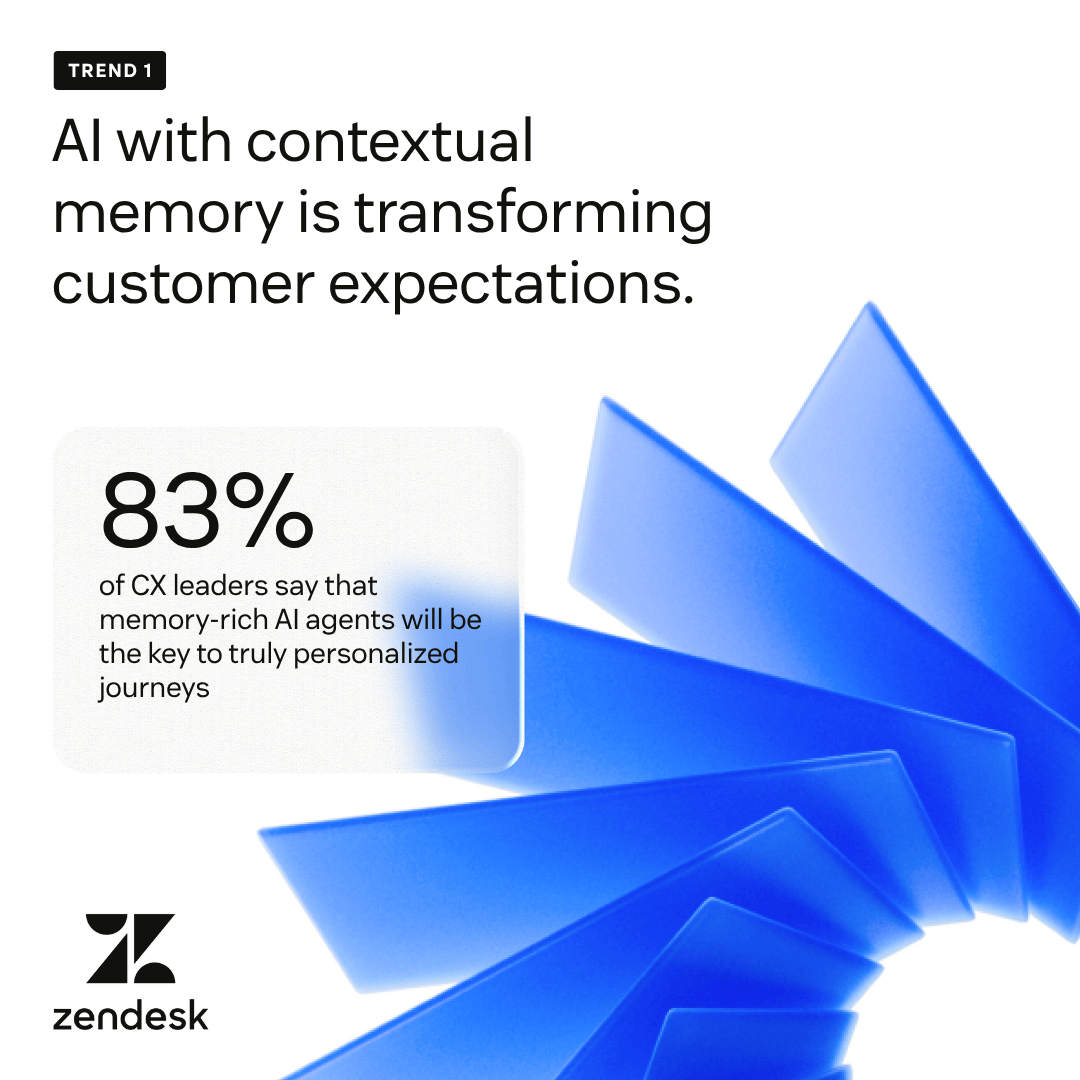
Why Repeating Yourself Kills Trust
When customers repeat themselves, it sends a clear message: the system doesn’t remember me.
No matter how polite the agent is or how quickly they respond, if the customer has to start over, the experience feels broken.
This is why 'reducing customer effort' is such an important CX goal. Customers want less friction, not more automation. They want:
- Fewer handoffs
- Fewer explanations
- Saying the same thing fewer times
When customers have to work harder, their confidence drops. They stop believing the brand can help.
What Memory-rich AI Actually Means
Memory-rich AI isn’t just about saving more data. It’s about using the right information when it matters most.
In customer experience, this means AI that can remember and use:
- Past conversations
- Which channel did the customer use before
- Previous issues and outcomes
- Relevant policies or account details
People often call this 'AI customer history,' but the main difference is that it's useful. The AI doesn’t just save it; it uses it.
That’s where AI personalisation in customer experience feels real instead of forced.

How Memory-rich AI Works Across Chat, Email, and Voice
Most CX problems don’t come from one bad channel. They come from switching channels.
A memory-rich setup keeps customer context across channels so nothing gets lost when the conversation moves between them.
Here’s what that looks like in practice:
- A chat conversation carries over into email without resetting the issue.
- A phone agent can see what the customer already tried in self-service.
- Follow-ups don’t reopen the same problem from zero.
The channel changes, but the understanding doesn’t.
Many teams struggle here. The tools are available, but context often stays trapped in separate systems.
Why Agents Perform Better with Shared Context
Agents don’t like having to ask customers to repeat themselves either.
When agents can see the full story, they:
- Resolve issues faster
- Make fewer mistakes
- Don’t need to ask basic questions.
- Feel more confident in their responses.
One of the biggest benefits of memory-rich AI is that it supports people, not replaces them.
When agents have shared context, they spend less time searching and more time helping. This is how teams reduce customer effort without extra pressure on staff.
What High-maturity CX Teams Do Differently
Teams that do this well don’t start with AI tools. They focus on flow first.
High-maturity CX teams:
- Make sure conversations stay connected across channels.
- Agree on what customer history actually matters.
- Connect systems before adding more automation.
- Focus on solving issues, not just closing tickets.
This is when memory-rich AI becomes practical, not just theoretical. It fits into the team’s workflow.
Where Zendesk fits into this picture
Zendesk plays a big role in making memory-rich AI possible, especially when set up properly.
With the right configuration, teams can use memory-rich AI in Zendesk to:
- Keep customer context across channels.
- Surface past conversations automatically.
- Support agents with relevant history, not noise
Many teams need help here, too. The platform can do a lot, but only if the surrounding systems are connected, and the data is clear.
If you’re already working on customer context across channels, Zendesk is where that context becomes visible for agents and customers.
Final Thoughts
Customers aren’t asking for magic. They’re asking to be remembered.
Memory-rich AI helps CX teams do just that. It doesn’t just sound smarter; it shows the conversation matters.
When customers don’t have to repeat themselves, trust returns. That’s what good customer experience is all about.
Want a Deeper Look at CX Trends for 2026?
We’re unpacking these CX trends in our upcoming CX webinars, where we’ll explain what memory-rich AI looks like in real Zendesk environments and what CX leaders should focus on next.
You’ll hear practical examples, common mistakes teams are making, and how to move beyond surface-level automation.
👉 Register here or watch later
As a Zendesk Premier Partner, Gravity CX works with teams applying these trends in real-world CX setups, not just talking about them.
Frequently Asked Questions
What is memory-rich AI in customer experience?
Memory-rich AI means the system remembers past conversations and uses that history to help customers faster and more accurately.
How does memory-rich AI reduce customer effort?
By keeping context across channels, customers don’t have to repeat themselves, and agents can resolve issues faster.
How is memory-rich AI different from regular AI?
Regular AI might generate replies or automate tasks. Memory-rich AI uses customer history in a meaningful way, so interactions feel connected.
What does “customer context across channels” mean?
It means the system keeps track of the customer’s issue across chat, email, and voice, so the support team always sees the full story.
How does Zendesk support memory-rich AI?
Zendesk can bring customer context into the agent view, showing past conversations and key details so agents don’t start from zero.